Understanding their difference and making the right choice for your formulation
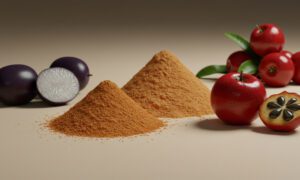
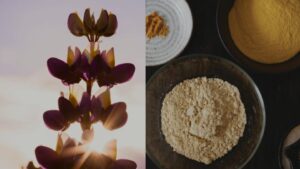
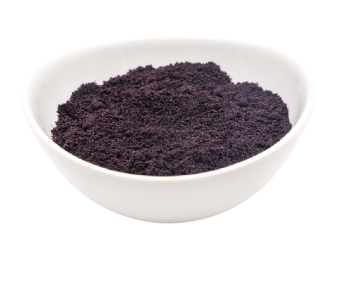
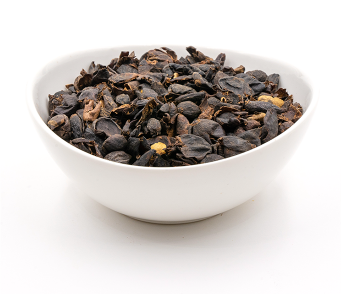
A botanical straight powder is obtained by simply drying and grinding whole plant material. It retains the full spectrum of constituents – both active and inert – potentially preserving synergistic interactions and the plant’s inherent complexity. On the other hand, a botanical dry extract is produced by using solvents (e.g., water, ethanol) to selectively extract certain phytochemical constituents, followed by concentration and drying. This results in a product enriched for target compounds.
The botanical dry extract enables chemical standardization by analyzing for marker or active compounds via advanced analytical methods (e.g., HPLC, HPLC–MS, etc), allowing batch-to-batch reproducibility. The straight powders, lacking such extraction, may exhibit greater variability and lack standardized marker levels.
When processing a botanical extract, solvent type (primarily water), extraction parameters (temperature, time), pre-processing (e.g., grinding), and advanced techniques (ultrasound, supercritical fluid, microwave-assisted extraction) significantly influence extract composition—affecting efficacy, reproducibility, and stability. The botanical straight powder composition is only marginally influenced by process parameters (basically the drying temperature).
Botanical extracts in general concentrate bioactive compounds by the removal of insolubles (especially cellulosic fibers), often resulting in formulations with higher potency per weight, which in turn allows lower dosages (in capsules, for instance) than that required of straight powders.
| Attribute | Botanical Straight Powder | Botanical Extract |
| Composition | Full plant matrix | Concentrated selected constituents |
| Processing | Drying + grinding | Solvent (extraction + concentration + drying) |
| Standardization | Rarely standardized | Often standardized (marker-based) |
| Solubility in water | Low to moderate | Very good (when extraction solvent is water or ethanol for instance) |
| Analytical reproducibility | Low | High |
| Potency per mass | Lower | Higher |
For a product formulator, the decision between a botanical extract and the straight powder is relatively simple. It will depend primarily on the product format (beverage, shot, powder blend, tea bag, capsule), required solubility, intended functional claims and dosage. We are always excited to engage in these discussions with our clients. Verum’s portfolio offers a few ingredients in both formats: yerba mate, guayusa, guarana, maca (regular, red or black), purple corn, cat’s claw, amongst others can be used both as straight powders and botanical extracts.
Feel free to reach out to discuss your choices in more detail!
References:
https://doi.org/10.1016/j.jchromb.2004.07.041
https://doi:10.3389/fphar.2023.1265178
https://doi.org/10.1021/acs.jmedchem.5b00417
https://doi.org/10.3390/molecules29245968