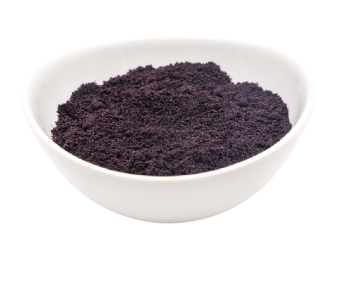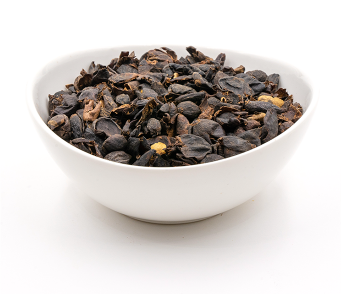
Currently, the main products sold for modulating the gut microbiota are dietary fiber, such as inulin and fructooligosaccharides (FOS). However, other classes of substances, such as phenolic compounds, have been identified as potential products with prebiotic-like activity¹. This activity occurs mainly because of phenolic compounds ability to interact with the gut microbiota, leading to microbiota modulation and consequent production of metabolites of interest1,2.
Phenolic compounds, substances that occur naturally in plants, are secondary metabolites widely studied for their antioxidant properties, being linked to the prevention and treatment of various chronic diseases¹. Additionally, they are increasingly associated with the development of a healthy gut microbiota². They can be divided into several classes, with flavonoids and stilbenes being the best known.
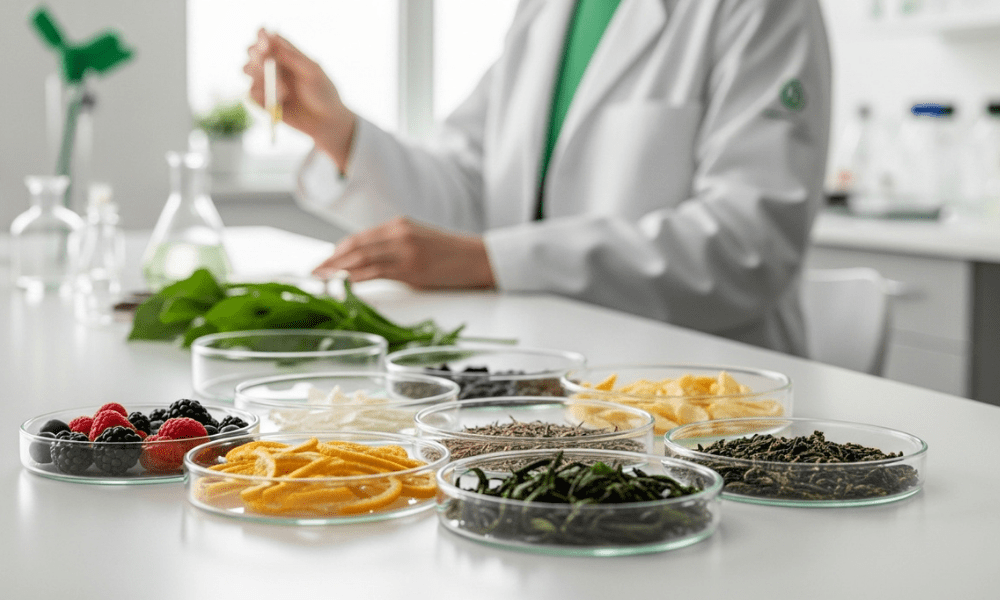
The flavonoids, which include isoflavones, anthocyanins, anthocyanidins, proanthocyanidins, and catechins, can be found in citric fruits (orange, lemons), vegetables (onion, kale), red wine, soy and teas (green and black tea) in both aglycone and glycosylated forms (with sugar molecules attached to the phenolic structures)³. In the case of stilbenes, the main representative is resveratrol, found mainly in red wine and peanuts and widely studied for its antioxidant and anticancer properties³.
In general, phenolic compounds have low bioavailability, i.e. only a small fraction reaches the systemic circulation and is available to produce a biological effect in the body. However, they can undergo extensive metabolism in the large intestine, favoring interaction with intestinal microorganisms². It is now known that phenolic compounds modulate the intestinal microbiota and, at the same time, the microbiota itself also modulates the activity of phenolic compounds, transforming this interaction into a two-way street².
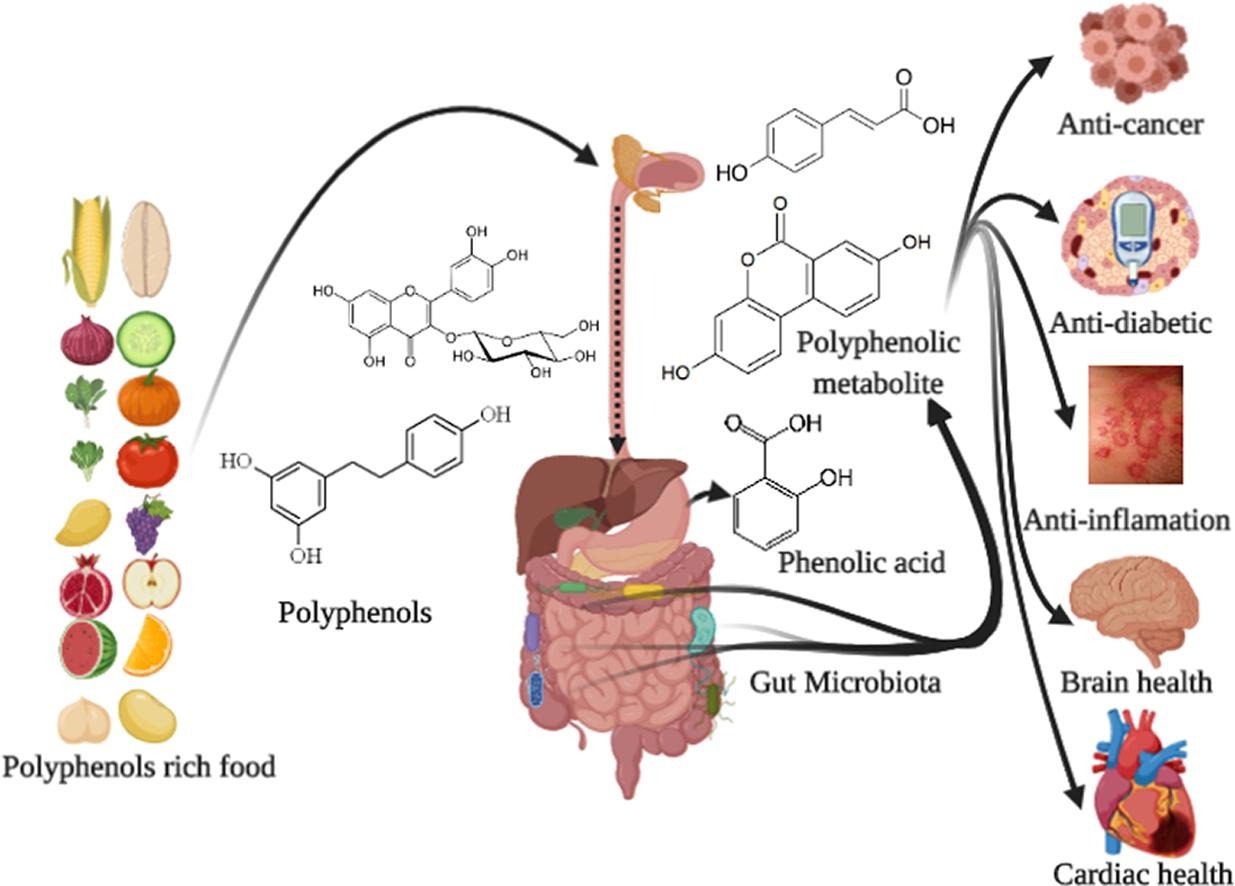
The glycosylated forms are broken down in the gut, releasing sugar fragments that can be fermented by gut microbiota, and complex structures can be broken down, releasing their monomers, increasing bioavailability and altering their activity4.
Based on that, phenolic compounds, as well as their metabolites, can modify and produce variations in the bacterial community by exhibiting prebiotic (“prebiotic-like”) effects and antimicrobial activity against intestinal pathogens being an interesting product for intestinal health5.
Several products in our portfolio are rich in phenolic compounds. Contact one of our consultants today to learn more and discuss the best options for your formulations.
References
- Sanders, M.E., et al. (2019). Probiotics and prebiotics in intestinal health and disease: from biology to the clinic. Nat Rev Gastroenterol Hepatol. 16(10), 605-616. doi: 10.1038/s41575-019-0173-3
- Alves-Santos, A.M., et al. (2020). Prebiotic effect of dietary polyphenols: A systematic review. Journal of Functional Foods, 74, e104169. https://doi.org/10.1016/j.jff.2020.104169
- Niedzwiecki, A., et al. (2016). Anticancer Efficacy of Polyphenols and Their Combinations. Nutrients. 8(9), e552. doi: 10.3390/nu8090552
- Shortt, C., et al. (2018). Systematic review of the effects of the intestinal microbiota on selected nutrients and non-nutrients. Eur J Nutr. 57(1), 25-49. doi: 10.1007/s00394-017-1546-4
- Tzounis, X., et al. (2011). Prebiotic evaluation of cocoa-derived flavanols in healthy humans by using a randomized, controlled, double-blind, crossover intervention study. Am J Clin Nutr. 93(1), 62-72. doi: 10.3945/ajcn.110.000075