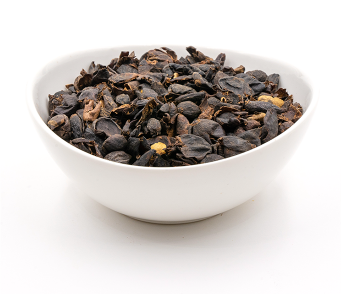
In the current landscape of the food and supplement industry, the search for functional ingredients that offer transparency and efficacy is constant. Acerola has evolved from a simple tropical fruit into a strategic pillar for clean label formulations. But what technically differentiates the vitamin C found in acerola from that of synthetic solutions? The answer is in the “food matrix” and the chemical complexity that nature provides.
Origin and occurrence
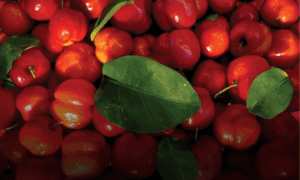
Acerola is a shrub native to the tropical and subtropical regions of the Americas. Although it can be found from southern Texas to the Caribbean and South America, Brazil has consolidated itself as the largest producer, consumer, and exporter of the fruit, particularly in the Northeast region. Due to its fragility and rapid post-harvest degradation, the efficiency of the supply chain is the determining factor in preserving its active compounds.
Tradition and consumption
Historically, the use of plants for nutritional and medicinal purposes has accompanied human evolution. Data from the World Health Organization indicates that about 80% of the world’s population still resorts to traditional medicine as primary health care, using plants and their bioactive compounds.
This age-old relationship has evolved into modern food science. The growing consumer interest in products that promote health and well-being has driven the development of natural ingredients that can be incorporated into functional foods, meeting the demand for “clean” products–without synthetic additives–that are also nutritionally potent.
The practical difference: natural vitamin C versus synthetic ascorbic acid
When developing a product, the decision between using synthetic ascorbic acid or acerola powder goes beyond the label. Although chemically similar in isolation, the vitamin C in acerola does not act alone.
Scientific studies demonstrate that the presence of other nutrients, such as minerals, fibers, and fundamentally, bioflavonoids, significantly increases the bioavailability of natural vitamin C. Comparative research shows that the use of natural sources, such as acerola juice, promotes better plasma absorption and minimizes urinary excretion compared to ascorbic acid administered alone. There are practical examples where supplementation with natural vitamin C has shown superior efficacy compared to synthetic supplementation.
Chemical composition and benefits
Acerola is a functional powerhouse. Beyond vitamin C (which can range from 1,500 to 4,500 mg/100g in the fresh fruit), it is rich in a complex matrix of bioactives:
- Phenolic compounds and flavonoids: naringenin, catechin, epicatechin, and rutin, among others.
- Anthocyanins: responsible for a portion of the antioxidant capacity.
- Organic acids: tartaric, malic, and citric acids.
These components act in synergy, providing proven benefits:
- Antioxidant and anti-inflammatory action: neutralization of free radicals and positive modulation of cytokines such as IL-10.
- Hepatoprotective and dermoprotective effects: liver protection and support for collagen synthesis.
- Metabolic control: aids in the reduction of glucose, cholesterol, and triglycerides.
Industrial applications
The versatility of acerola allows for its application in several segments, being a superior alternative to synthetic antioxidants generally recognized as safe:
- Meat products: acts on oxidative stability, preventing rancidity and accelerating curing reactions, outperforming synthetic alternatives like sodium erythorbate.
- Bakery: functions as a natural oxidizing agent that stabilizes the gluten network, resulting in greater bread volume and uniform crumb structure, often exceeding the performance of synthetic improvers.
- Supplements and beverages: nutritional enrichment with clean label appeal.
Portfolio solutions by Verum: quality and traceability
We offer a complete line of acerola powders:
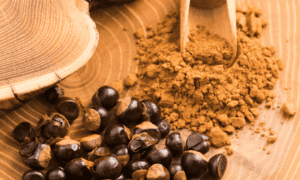
- Formats: dehydrated powder and extracts.
- Processes: spray-dried and freeze-dried.
- Options: organic and conventional versions.
- Standardization: our extracts are standardized in natural vitamin C, ensuring levels between 17% and 40%, allowing for technical precision in formulation.
Why choose our ingredients?
Our differential is not only in the product, but in the intelligence behind it:
- Technical expertise and support: our team offers guidance to replace synthetic additives with natural solutions, without compromising performance.
- Safety and logistics: we guarantee full traceability, international certifications (food safety, organic, kosher), and local stock to ensure supply continuity.
References
1) Belwal, T., et al. Phytopharmacology of acerola (Malpighia spp.) and its potential as functional food. Trends in Food Science & Technology, v. 74, p. 99-106, 2018. https://doi.org/10.1016/j.tifs.2018.01.014
2) Uchida, E., et al. Absorption and excretion of ascorbic acid alone and in acerola (Malpighia emarginata) juice: comparison in healthy Japanese subjects. Biological and Pharmaceutical Bulletin, v. 34, n. 11, p. 1744-1747, 2011. https://doi.org/10.1248/bpb.34.1744
3) Kaur, S., Sangha, J. K. A comparative study of natural vs. synthetic vitamin c supplementation to prevent anemia. Journal of Scientific Research & Reports, v. 15, n. 1, p. 1-13, 2017. https://doi.org/10.9734/JSRR/2017/34470
4) Carr, A. C., Vissers, M. C. M. Synthetic or food-derived vitamin c – are they equally bioavailable? Nutrients, v. 5, p. 4284-4304, 2013. https://doi.org/10.3390/nu5114284
5) Batista, K. S., et al. Acerola fruit by-products alleviates lipid, glucose and inflammatory changes in the enterohepatic axis of rats fed a high-fat diet. Food Chemistry, v. 403, 134312, 2023. https://doi.org/10.1016/j.foodchem.2022.134322