
Verum Ingredients

How do processing methods influence bioactive compounds in fruit powders?

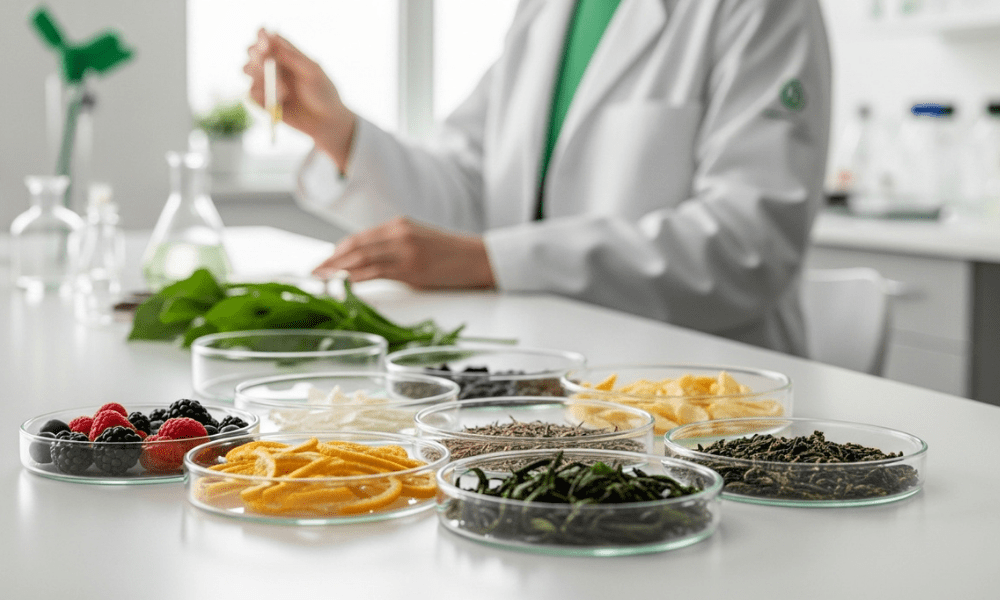
Processing methods significantly impact the content of bioactive compounds in fruit powders. Understanding these effects is crucial for optimizing the functional properties of fruit-based ingredients. What are the primary bioactive compounds in fruit powders? Fruit powders are rich in various bioactive compounds, including: Phenolic compounds: flavonoids and phenolic acids, known for their antioxidant properties. Carotenoids: for instance β-carotene, a precursor of vitamin A. Vitamins: like ascorbic acid (aka vitamin C), essential for collagen synthesis and with potent antioxidant properties. Dietary fibers: important for digestive health. These compounds contribute to the nutritional and functional qualities of fruit powders. How do drying technologies affect bioactive compounds? Besides the juice extraction and concentration, drying is another critical step in fruit powder production. The different drying technologies used can influence the retention of bioactive compounds. Some methods are more suitable than others, depending on the nature of the fruit juice/pulp that will be dehydrated. Spray-drying: Involves atomizing the fruit juice into a hot air stream. While efficient, it can lead to partial degradation if highly heat-sensitive compounds are present. Often requires the incorporation of an excipient for very sugary or fatty fruit juices/pulps. Freeze-drying: Preserves bioactive compounds by sublimating ice from frozen juices under vacuum. Studies indicate that freeze-dried fruit powders retain higher levels of antioxidants when heat-sensitive compounds are present. Hot air-drying: A conventional method that can cause partial degradation of bioactive compounds, potentially reducing antioxidant activity and nutritional quality. What role do carrier agents play in fruit powder quality? Carrier agents are often added to fruit powders as process adjuvants and to enhance their stability and quality: Maltodextrin: Improves drying performance, product solubility, and flowability. Gum: Enhances dispersibility and protects sensitive compounds. Modified starch: Contributes to texture and stability. These agents help maintain the functional properties of fruit powders like flavor and flowability during storage. How do processing methods impact the final product? The choice of processing method affects the final product in several ways: Nutritional profile: Methods that preserve bioactive compounds result in higher nutritional value. Sensory attributes: Each method can influence color, flavor, and texture differently, affecting consumer acceptance. Shelf life: Proper processing extends the shelf life by maintaining the sensorial stability and flowability (prevents caking/clumping of the fruit powder). Therefore, the selection of suitable drying technologies and process adjuvants is crucial for producing high-quality fruit powders. Conclusion Processing methods significantly influence the bioactive compound content and overall quality of fruit powders. Understanding these effects allows for the optimization of fruit-based ingredients. You can definitely count on us to help you choose the best option for your formulation. References: https://doi.org/10.3390/app132212496 https://doi.org/10.1016/j.tifs.2017.05.006 https://doi.org/10.3390/app14209183 https://doi.org/10.1016/j.fochx.2024.101156

How do processing methods influence bioactive compounds in fruit powders? Read More »

Acerola: functional superfruit for modern health

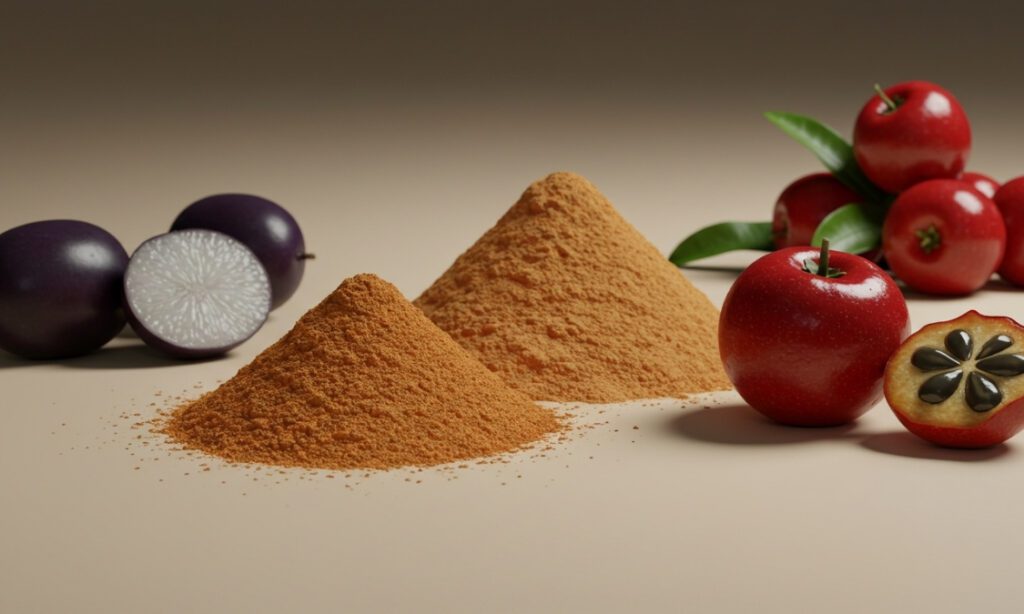
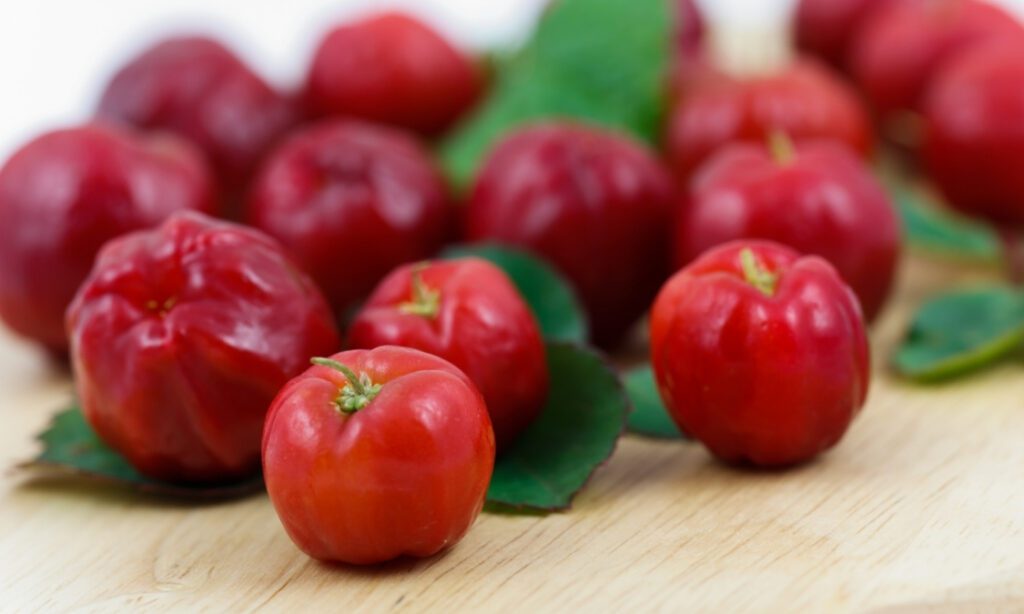
Why is acerola a top choice for functional powders? Verum offers spray-dried and freeze-dried organic acerola that can be applied to powdered beverages, supplements, and functional foods. Literature associates acerola with high antioxidant capacity due to its vitamin C, phenolic compounds, and flavonoids content. What bioactive compounds contribute to acerola’s health benefits? Acerola contains a rich array of bioactive compounds, including: Vitamin C: Acerola is one of the richest natural sources of ascorbic acid, with concentrations ranging from 1500 to 4500 mg per 100 g, significantly surpassing that of oranges or lemons. Phenolic compounds: These include flavonoids and anthocyanins, which contribute to acerola’s antioxidant properties. Carotenoids: These compounds are associated with various health benefits, including antioxidant effects. How does acerola support health? Literature associates acerola with several potential health benefits: Antioxidant activity: The high levels of vitamin C and polyphenols in acerola are believed to neutralize free radicals, reducing oxidative stress. Anti-inflammatory effects: Studies suggest that acerola may modulate inflammatory markers, potentially beneficial in managing chronic inflammatory conditions. To explore more about acerola applications and our acerola portfolio, check the links below: Acerola power: precision for formulators, power for the body Verum offers the most diverse acerola powder portfolio on the market References: https://doi.org/10.3390/ijms25042089 https://doi.org/10.1016/j.fbio.2024.105422 https://doi.org/10.1177/1082013205056785 https://doi.org/10.1111/jfbc.13829

Acerola: functional superfruit for modern health Read More »

Botanical dry extract or botanical straight powder?

Understanding their difference and making the right choice for your formulation A botanical straight powder is obtained by simply drying and grinding whole plant material. It retains the full spectrum of constituents – both active and inert – potentially preserving synergistic interactions and the plant’s inherent complexity. On the other hand, a botanical dry extract is produced by using solvents (e.g., water, ethanol) to selectively extract certain phytochemical constituents, followed by concentration and drying. This results in a product enriched for target compounds. The botanical dry extract enables chemical standardization by analyzing for marker or active compounds via advanced analytical methods (e.g., HPLC, HPLC–MS, etc), allowing batch-to-batch reproducibility. The straight powders, lacking such extraction, may exhibit greater variability and lack standardized marker levels. When processing a botanical extract, solvent type (primarily water), extraction parameters (temperature, time), pre-processing (e.g., grinding), and advanced techniques (ultrasound, supercritical fluid, microwave-assisted extraction) significantly influence extract composition—affecting efficacy, reproducibility, and stability. The botanical straight powder composition is only marginally influenced by process parameters (basically the drying temperature). Botanical extracts in general concentrate bioactive compounds by the removal of insolubles (especially cellulosic fibers), often resulting in formulations with higher potency per weight, which in turn allows lower dosages (in capsules, for instance) than that required of straight powders. Attribute Botanical Straight Powder Botanical Extract Composition Full plant matrix Concentrated selected constituents Processing Drying + grinding Solvent (extraction + concentration + drying) Standardization Rarely standardized Often standardized (marker-based) Solubility in water Low to moderate Very good (when extraction solvent is water or ethanol for instance) Analytical reproducibility Low High Potency per mass Lower Higher For a product formulator, the decision between a botanical extract and the straight powder is relatively simple. It will depend primarily on the product format (beverage, shot, powder blend, tea bag, capsule), required solubility, intended functional claims and dosage. We are always excited to engage in these discussions with our clients. Verum’s portfolio offers a few ingredients in both formats: yerba mate, guayusa, guarana, maca (regular, red or black), purple corn, cat’s claw, amongst others can be used both as straight powders and botanical extracts. Feel free to reach out to discuss your choices in more detail! References: https://doi.org/10.1016/j.jchromb.2004.07.041 https://doi:10.3389/fphar.2023.1265178 https://doi.org/10.1021/acs.jmedchem.5b00417 https://doi.org/10.3390/molecules29245968

Botanical dry extract or botanical straight powder? Read More »

Meet the newest South American superfood in our portfolio: Chocho

A cute, short name for an amazing plant-based protein powerhouse. Chocho, also known as Andean lupin bean or tarwi (Lupinus mutabilus), is a protein-packed superfood cultivated in the Andean highlands for over 1,500 years. With higher protein content than soybeans and peas, Chocho is a regenerative crop that supports indigenous farming. Its mild nutty flavor and versatility make it ideal for recipes like smoothies, baked goods and culinary innovations. Known as a cornerstone of Andean diets for over 2,500 years, this pearly-white super bean is emerging as a global plant-based protein powerhouse. With unmatched nutritional value, regenerative properties, and cultural significance, Chocho offers a sustainable solution to modern dietary and environmental challenges. The Ecuadorian Andes, home to peaks reaching 20,000 feet, form what locals call the Volcano Alley. This region, with its pristine volcanic soil and fertile landscapes, provides ideal conditions for Chocho cultivation. The crop thrives in the local intense sunlight, at high altitudes where volcanic ash enriches the earth and pure rainwater nourishes the plants. Chocho’s resilience in drought conditions and its nitrogen-fixing roots make it a regenerative crop that enhances soil health, supporting adjacent crops like corn and potatoes (Lost Crops of the Incas, 1989). Nutritional powerhouse Chocho stands out as the world’s premier plant-based protein source. Each bean contains: Over 50% protein, surpassing peas, hemp, soy, and peanuts. A complete amino acid profile, rich in leucine, lysine, and valine (branched-chain amino acids, or BCAAs), essential for muscle repair, collagen synthesis, and mental vigor (Ha & Zemel, 2003). High fiber content, particularly in the seed husk, supporting digestive health. Calcium levels comparable to a glass of milk, promoting bone health. A low glycemic index, linked to improved blood glucose control, making it helpful for managing dysglycemia (Baldeón et al., 2012). These attributes position Chocho as a versatile ingredient for plant-based products like tofu, vegan cheese, and meat alternatives. Historical and cultural significance Chocho’s cultivation dates back to at least 1000–1200 B.C., with evidence from the Tiwanaku culture, who stored Chocho alongside kaniwa and amaranth for their long shelf life (Bowman, 1981). The Caranquis, an Incan subculture in northern Ecuador, relied on Chocho as a staple crop by 500 A.C., cultivating it similarly to wheat (Rodriguez Docampo, 1965). Despite its historical importance, Chocho has been stigmatized as “poor people’s food” in modern times, limiting its commercial adoption. However, its role in nitrogen fixation has kept it relevant as a companion crop for farmers. Chocho naturally contains the most protein of all traditional plant-based sources. How is Chocho different from other protein sources? A wholesome ingredient with additional macro and micronutrients, not an isolate Lectin-free No industrial farming, regenerative instead; real social impact for small farmers No pesticide (including glyphosate) use How can you use Chocho in your product formulation projects? You can use Chocho in several different applications, including protein powders, smoothies, and baked products (partial flour replacement). Chocho blends beautifully with any berry or fruit without altering its taste. But it adds thickness and a very nice texture. Consistent feedback from tonic bar associates and customers indicates that Chocho has a better texture, blend, and taste compared to traditional plant proteins. Its mild taste is perfect to add protein to açai bowls, yogurt and oatmeal. It can also add fiber and texture to cold brew coffees that will sustain you all day. Conclusion Chocho is more than a crop—it’s a testament to Andean resilience, ingenuity, and sustainability. As we explore its possibilities, this Andean superfood invites us to rethink our food systems and embrace the wisdom of Volcano Alley. References Lost Crops of the Incas: Little-Known Plants of the Andes with Promise for Worldwide Cultivation. National Research Council, 1989. Baldeón, M. E., et al. “Hypoglycemic effect of Lupinus mutabilis in healthy volunteers and subjects with dysglycemia.” Nutrición Hospitalaria, 2012, https://pdfs.semanticscholar.org/aa08/88fb0b2f2daf78e3c8f0abbae2e3660fd9e2.pdf. Bowman, D. “Tiwanaku Agriculture.” Journal of Andean Studies, 1981. Ha, E., & Zemel, M. B. “Functional properties of leucine, lysine, and valine.” Journal of Nutritional Biochemistry, 2003. Rodriguez Docampo, J. “Agricultural Practices in the Andes.” Colonial Records, 1965. Tello, J. “Early Andean Crop Domestication.” Archaeological Review, 1976. https://mikunafoods.com/blogs/journal/chocho-101

Meet the newest South American superfood in our portfolio: Chocho Read More »

The importance of traceability in the food industry

Why is traceability essential in today’s global food landscape? In an interconnected food system, traceability ensures transparency—tracking every ingredient from farm to shelf. It supports compliance with global food safety frameworks, swift recall actions, and operational efficiency by reducing waste and preventing fraud. Traceable systems help to minimize the production and distribution of unsafe or poor-quality products. How does traceability support biodiversity and sustainability? Traceability is crucial for preserving biodiversity, especially in sensitive biomes. By documenting sourcing and processing steps, companies can demonstrate compliance with sustainable harvesting practices and support traditional communities. What real-world benefits does traceability bring to food businesses? Traceability offers tangible advantages: Food safety: enables rapid containment of contamination Quality assurance: ensures batch authenticity and prevents adulteration Operational gains: reduces losses—recall efficiencies support sustainable supply chains, reducing waste in post-harvest and warehousing stages Consumer trust: strengthens brand reputation by offering transparency How does Verum implement traceability in practice? At Verum, we integrate traceability at every stage: Certified sourcing: organic certifications in origin countries and the US ensure legal compliance and sustainability FDA-approved facilities: compliant with FSMA and FSVP, enhancing safety and export readiness Supplier validation: each batch is documented, and tested, guaranteeing consistent, transparent supply chains Why is traceability a strategic advantage for brands? Traceability becomes a market differentiator by: Enhancing transparency for B2B buyers and regulators Supporting premium positioning through clean-label and sustainability credentials Building consumer loyalty via consistent quality Mitigating future risks, as traceable brands are better prepared for evolving regulations References: https://doi.org/10.3390/su15020898. https://doi.org/10.3390/su15020898. https://doi.org/10.1590/0103-6513.20230035.

The importance of traceability in the food industry Read More »

The power of guayusa in functional formulations

What is guayusa and why is it gaining attention? Guayusa (Ilex guayusa) is a caffeinated holly leaf native to the Ecuadorian Amazon, traditionally brewed by indigenous communities. It has recently surged in popularity due to its rich chemical profile – including caffeine, theobromine, L-theanine, and potent antioxidants – offering consumers a smooth yet energizing alternative to coffee and synthetic stimulants. How does guayusa deliver clean, sustained energy? An 8 oz cup of guayusa contains roughly 100 mg of caffeine, supported by theobromine – creating a state of calm alertness without the typical caffeine crash. Its L‑theanine content further smooths the stimulant profile, reducing jitteriness while enhancing focus and mood. What makes guayusa a potent antioxidant source? Guayusa leaves are exceptionally rich in polyphenols – catechins, chlorogenic acids, flavonoids – and other bioactive substances like triterpenoids (e.g., ursolic acid). Studies show that these compounds support cellular health, reduce inflammation, and provide notable antioxidant activity – proven to be more potent than green tea in comparative analyses. Are there additional health benefits beyond energy? Emerging research suggests guayusa may help regulate blood sugar and support metabolic health. Its triterpenoid content may promote energy expenditure and insulin sensitivity. Moreover, cognitive performance benefits have been attributed to the synergistic action of methylxanthines, polyphenols, and L-theanine. Are there any considerations for safe consumption? Guayusa is generally well-tolerated; it delivers caffeine without strong stimulant-related side effects like fast heart rate or anxiety. However, its caffeine content means moderation is advisable, and individuals sensitive to caffeine should monitor intake. Tannins may slightly impact mineral absorption if consumed excessively. Why is guayusa ideal for product innovation? For functional formulas and clean-label beverages, guayusa stands out by checking several boxes: Energetic and cognitive support backed by science Antioxidant potency delivering health benefits Smooth stimulant experience with cultural authenticity Versatility in application (RTDs, energy drinks, supplements, snacks, sports products) How does Verum bring guayusa to your formulations? We supply standardized guayusa extracts with controlled levels of polyphenols and caffeine – delivered through precise sourcing and quality processes. Our guayusa extract ensures consistent potency, stability, and functional effect. Partner with us to integrate guayusa into your next product, achieving innovation, natural positioning, and scientific credibility. Ready to innovate? Contact Verum’s technical team to discuss formulation opportunities with guayusa and elevate your brand with a plant‑based, performance‑driven ingredient. References Guayusa: Benefits and Uses – Healthline (https://www.healthline.com/nutrition/guayusa) Polyphenolic Composition of Guayusa – MDPI Nutrients (https://www.mdpi.com/2072-6643/10/11/1682) Ursolic Acid in Plant-Based Extracts – PubMed (https://pubmed.ncbi.nlm.nih.gov/30599971/) Cognitive Effects of Natural Methylxanthines – PubMed (https://pubmed.ncbi.nlm.nih.gov/30213684/) Medicinal Herb Info – Guayusa Profile (https://medicinalherbinfo.org/000Herbs2016/guayusa/)

The power of guayusa in functional formulations Read More »

Verum Ingredients begins its first clinical trial

Verum Ingredients’ R&D department began its first clinical trial in June, evaluating the prebiotic activity of different food ingredients in healthy volunteers. This study is part of a larger project initiated in September 2024 supported by a grant from the Small Business Innovation Research Program (Programa PIPE) by Fapesp (Research Funding Agency of Sao Paulo) in Brazil. The Verum Ingredients Research and Development (R&D) unit was created in 2018 with the aim of developing innovative products in the functional food segment. Located in the Botucatu Technology Park (SP), it has highly qualified professionals who work on the interdisciplinary development of products, using their expertise in molecular biology, pharmacology, analytical and natural product chemistry, microbiology and biochemistry. In addition, it maintains a strategic partnership with the FitoFarmaTec Multiuser Laboratory, of the Department of Biophysics and Pharmacology of Sao Paulo State University (Unesp). In this study, different prebiotic ingredients will be evaluated, including soluble fibers, and a potent antioxidant ingredient with prebiotic-like activity. Additionally, formulations combining them will also be evaluated. “Our goal is to develop an innovative product combining two distinct mechanisms of action and with more pronounced activity than standard prebiotic fibers”, says Dr. Ana Quaglio, head of R&D at Verum Ingredients. The ongoing clinical study will recruit 100 healthy volunteers who will consume one of the 5 products for 4 weeks. At the end of this period, blood parameters such as fasting blood glucose and cholesterol levels will be evaluated. In addition, the gut microbiota of each healthy volunteer will be evaluated by quantifying some beneficial intestinal bacteria and levels of short-chain fatty acids, important markers of prebiotic activity. Moreover, quality of life, eating habits, sleep and anxiety questionnaires will be applied at the beginning and end of the clinical trial period. All studies are being developed in partnership with the Medical School (FMB) of Unesp under the supervision of Prof. Dr. Ligia Yukie Sassaki (PhD, MD) gastroenterologist and coordinator of the Ambulatory of Inflammatory Bowel Diseases of UNESP. This first clinical trial represents a milestone for Verum Ingredients’ R&D department, demonstrating its commitment to developing safe food ingredients with proven functional activity.

Verum Ingredients begins its first clinical trial Read More »

Acerola power: precision for formulators, power for the body

We understand that when it comes to acerola, there is no such thing as a one-size-fits all solution. That is why we offer one of the most comprehensive and versatile acerola powder portfolios available in the U.S. market – designed to meet the needs of an increasingly sophisticated and innovation-driven industry.

Often, customers approach us simply asking for “acerola powder.” But behind this broad request lies a world of variations – differences in solubility, vitamin C concentration, organic status, and processing methods – that can significantly impact which ingredient to use and how it will perform in the final product.

Acerola power: precision for formulators, power for the body Read More »

The relationship between proteins and gut microbiota – the key is in the balance

This article examines how dietary protein interacts with the gut microbiota and affects intestinal health. While most proteins are efficiently digested, undigested residues can reach the colon and alter the microbial balance, increase gut permeability, and generate harmful metabolites like TMAO—linked to inflammation and cardiovascular risk. On the positive side, some amino acids, like tryptophan, can be fermented into beneficial compounds such as serotonin and indoles, supporting immune and neurological functions. The key message: protein is essential, but its digestibility and interaction with the microbiota must be well managed to promote health.

The relationship between proteins and gut microbiota – the key is in the balance Read More »

The new generation of natural ingredients: health and sensory pleasure for functional beverages

Consumers of functional beverages today seek more than health benefits—they want bold flavors, pleasant mouthfeel, and enjoyment with every sip. Natural ingredients are gaining attention, especially those offering clean energy and unique sensory profiles. Verum offers a portfolio of South American botanicals like guarana, yerba mate, and guayusa, combining indigenous tradition, distinctive taste, and functional potential. With natural caffeine and traceable sourcing, these ingredients deliver bold flavor, smooth texture, and sustained energy, meeting the growing demand for better-for-you drinks that blend functionality and sensory pleasure.

The new generation of natural ingredients: health and sensory pleasure for functional beverages Read More »

How can we modulate the skin microbiome to our advantage?

The skin, the body’s largest organ, hosts beneficial microbes that protect against pathogens, educate immunity, and help break down natural products. When the skin barrier is damaged or microbial balance is disrupted, diseases can occur. Topical probiotics—applying live microbes—have gained interest for improving skin health, but keeping bacteria alive in products is challenging. Thus, many use prebiotics (nutrients for good bacteria) or postbiotics (bacterial compounds). Nutricosmetics, ingestible supplements like collagen or probiotics, aim to enhance beauty from within. However, clinical evidence supporting these approaches is limited. Proper skincare—hydration, cleansing, UV protection—remains key to nurturing the skin microbiome.

How can we modulate the skin microbiome to our advantage? Read More »

Food Quality Index: the NOVA system and its implications for health

Good eating habits are key to preventing diseases like hypertension, diabetes, and obesity, which are linked to industrialized food consumption. The NOVA classification categorizes foods by processing level: minimally processed, processed culinary ingredients, processed foods, and ultra-processed foods. Ultra-processed foods contain additives that may harm gut microbiota and promote inflammation. In high-income countries, they contribute over half the daily energy intake, correlating with poor diets and metabolic syndromes. Encouraging natural, minimally processed foods can improve health and reduce chronic diseases.

Food Quality Index: the NOVA system and its implications for health Read More »